
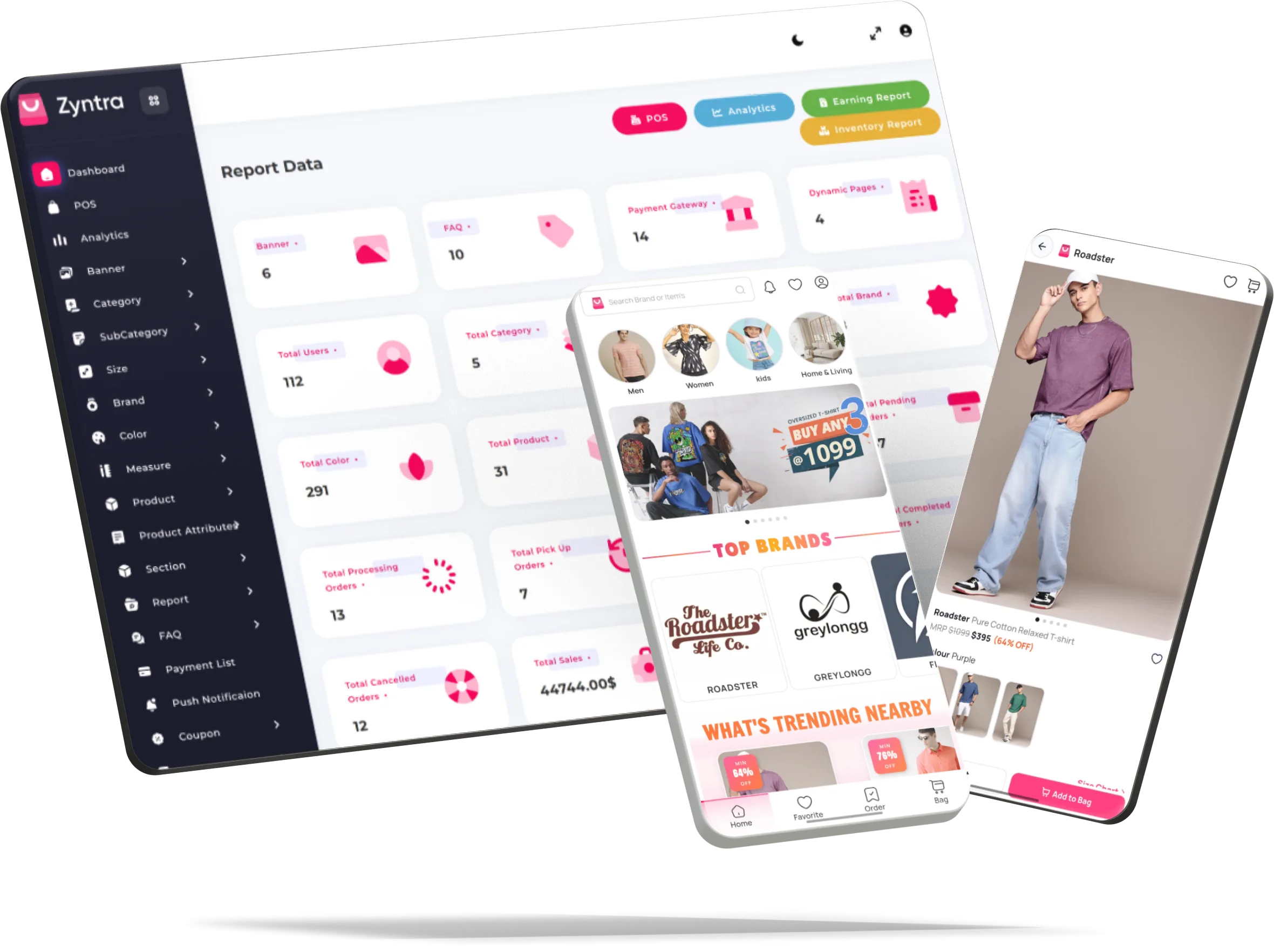
The choice between white-label and custom development is one of the most important decisions a startup makes. It affects how fast you launch, how much control you have, how much you can differentiate, and how much technical debt you accumulate.
Both options are viable, but they solve different problems. White-label is for founders who want to validate a market quickly with minimal capital. Custom development is for founders who have already proven demand and want to build something defensible and scalable long-term.
White-Label vs Custom: Complete Comparison
| Factor | White-Label | Custom Development |
|---|---|---|
| Time to Launch | 2-4 weeks | 8-16 weeks |
| Development Cost | $5-25k | $50-150k |
| Customization | Limited (colors, logo) | Full (workflows, features) |
| Branding | Generic (feels templated) | Unique (own identity) |
| Scalability Limit | 50k-100k users max | Unlimited |
| Monthly Maintenance Cost | $500-1,500 (subscription) | $2-5k (hosting + support) |
| Tech Debt | Very High | Low |
| Future Flexibility | Locked-in (hard to pivot) | Flexible (easy to add features) |
| Vendor Lock-In | High (switching is expensive) | Low (you own the code) |
What is White-Label?
White-label is a pre-built platform you rebrand and launch with your own name and logo. The vendor handles all backend infrastructure, updates, security, and compliance. You control the cosmetics (colors, fonts, logo) and sometimes integrations. Examples: food delivery (DineHub white-label), taxi booking (Gojek platform resale), marketplace (ShopiFy apps).
Pros: Launch in 2-4 weeks, minimal upfront capital ($5-25k), zero technical debt (vendor maintains code), no hiring needed. Cons: looks like other white-label apps (not unique), limited customization (can't change core workflows), locked into vendor's roadmap (if they prioritize features you don't need), scaling limits (~50-100k users before you hit infrastructure ceilings).
What is Custom Development?
Custom development means hiring a team (internal or agency) to build an app from scratch specifically for your needs. You own the codebase, architecture, and all decisions. You're responsible for hosting, updates, security, and maintenance.
Pros: complete control, unlimited customization, unique differentiation, unlimited scalability, builds team expertise. Cons: higher upfront cost ($50-150k+), longer timeline (8-16 weeks), ongoing maintenance burden ($2-5k/month), technical debt if poorly architected, requires managing developers.
Cost Comparison: Year 1 Total Cost of Ownership
| Scenario | White-Label | Custom MVP | Full Custom |
|---|---|---|---|
| Development | $10-20k | $50-80k | $120-200k |
| Monthly hosting/subscription (×12) | $6-18k | $2-6k | $3-8k |
| Third-party APIs | $2-5k | $2-5k | $2-5k |
| Marketing (CAC) | $10-30k | $10-30k | $10-30k |
| Operations (support, etc.) | $5-15k | $5-15k | $5-15k |
| Year 1 Total | $33-88k | $69-136k | $140-258k |
When to Choose White-Label
Choose white-label if:
- You're testing a new market: You have a hypothesis (e.g., "taxi app will work in city X") but haven't validated it. White-label lets you test fast ($12-15k, 2 weeks) without betting $100k.
- You have limited capital ($20k-30k): White-label is the only path to launch. Once you prove metrics (500+ weekly orders, 30%+ retention), you can invest in custom.
- Speed is more important than differentiation: If being first-to-market matters more than being unique, white-label gets you there 8-12 weeks faster.
- You're uncertain about long-term direction: If your product-market fit isn't clear, white-label limits the downside risk.
- You want to preserve capital for operations/marketing: Building an app is only 30% of success. The other 70% is operations, customer support, and marketing. If you have $80k, spend $15k on white-label and $65k on operations rather than $80k on custom development.
When to Choose Custom Development
Choose custom if:
- You've already proven demand: You have customers waiting, pre-sales, or a pilot business running. Investing $100k in custom development is justified.
- You need differentiation: Your competitive advantage requires specific tech (ML-powered dispatch, advanced analytics, specific workflows). White-label can't provide this.
- You're planning to scale aggressively: Custom development at $100k seems expensive until you compare it to white-label's 50k-user ceiling. If you plan to scale to 200k+ users, custom amortizes better over time.
- Your business model is unconventional: White-labels are built for standard models (food delivery, taxi, grocery). If your idea is a new category, custom is necessary.
- Long-term sustainability matters: Custom development costs more upfront but is cheaper to operate long-term. White-label costs less upfront but is expensive to maintain and difficult to evolve.
The Hybrid Approach: White-Label First, Then Custom
Many successful startups use a hybrid strategy:
- Month 0-3: Validate with white-label ($12-15k, 2-week launch). Prove 300-500 weekly orders with 25%+ retention.
- Month 3-6: Decision point. If metrics are strong, invest in custom development ($60-80k). If metrics are weak, pivot or shut down without major losses.
- Month 6-12: Migrate from white-label to custom. Data migration (customers, orders) happens during this phase. Overlap period allows parallel operation.
- Month 12+: Run on custom infrastructure. Scale aggressively with lower costs and more control.
Total investment: $72-95k (cheaper than going straight to full custom $120-200k) + you validated the market first (lower risk).
Real Case Study: FoodHero's Evolution
FoodHero started with white-label in Mumbai (cost: $14k). Month 2: 200 restaurants, 800 weekly orders, 28% repeat rate. Month 4: Metrics were strong enough to justify custom development. They invested $70k in custom platform over 12 weeks. Month 6: Migrated 400 restaurants from white-label to custom (data migration took 2 days with zero downtime). Custom version unlocked new features: advanced restaurant analytics, dynamic surge pricing, loyalty program (white-label didn't support). By month 12: 2,000 weekly orders, $100k monthly revenue. Year 1 total spend: $84k (white-label $14k + custom $70k). If they'd gone straight to custom: $120-150k with 14+ week timeline and unvalidated assumptions. The hybrid approach saved $30-50k and 6-8 weeks of risk.
Hidden Costs of White-Label
- Vendor lock-in: Switching platforms mid-growth is expensive ($20-40k data migration + 2-3 months of parallel operation).
- Roadmap misalignment: If the vendor prioritizes features you don't need, you're stuck waiting. Custom teams prioritize your roadmap.
- Performance at scale: White-label platforms often slow down beyond 50-100k users. You'll hit infrastructure ceilings you can't fix without migration.
- Customization friction: Small customizations that should take 1 week take 4-6 weeks because the vendor has to approve and implement.
- Monthly subscription creep: White-label fees often increase with scale ($500/month → $1,500/month → $5,000+/month). By year 3, you may have paid $50-100k in fees.
Hidden Costs of Custom Development
- Hiring & team management: Building and managing an engineering team costs $50-150k/year beyond salaries (recruiting, training, turnover).
- Technical debt: Poorly architected custom apps become expensive to maintain ($10-20k/month for legacy fixes). Invest in code quality upfront to avoid this.
- Scaling infrastructure: As you grow, you'll need DevOps engineers, database optimization, caching layers—these are costs white-label vendors absorb for you.
- Security & compliance: You're responsible for data security, GDPR compliance, payment PCI compliance. White-label vendors handle this, reducing your liability.
Decision Framework
If capital < $30k: White-label only. You can't afford custom.
If capital $30-80k: Hybrid approach (white-label first, custom if validated).
If capital $80-150k: Go straight to custom if you have strong product-market fit signals, otherwise start white-label.
If capital > $150k: Custom development. Use capital to validate and scale simultaneously.
FAQ: White-Label vs Custom
Can I migrate from white-label to custom without losing data?
Yes. Data migration typically takes 2-5 days and costs $3-10k. You can run both platforms in parallel during migration (1-2 week overlap). Zero user downtime is possible with proper planning.
How much does custom development cost if I want it to be "like Uber"?
Full custom with Uber-level features: $150-250k (16-24 weeks). MVP custom with core features: $60-100k (8-12 weeks). You don't need all of Uber's features to launch—focus on essential features first.
Why is white-label cheaper if I have to pay subscription fees forever?
Because white-label amortizes over scale. At 1,000 weekly orders, you're spending $100-150/month. At 10,000 weekly orders, you're spending $500-1,500/month. Eventually (if you scale big), switching to custom makes financial sense. But if you stay small (1,000-3,000 weekly orders), white-label remains cheaper forever.
Is the code from custom development reusable if I want to pivot?
Yes. Custom code is your intellectual property. You can pivot features, target new markets, or sell the business with your codebase intact. White-label, you own nothing—you're paying for access to someone else's platform.
The best choice depends on your capital, timeline, and confidence in your product-market fit. When in doubt, start white-label to validate, then invest in custom once metrics prove your model works. This approach minimizes risk and lets you preserve capital for the operations work that actually drives growth.


